
BariNationFoundation
Home/Treatment Options

Understand your options

More options.
A path that fits you.

Obesity care is personal. From daily medication to bariatric surgery, there are more ways forward than you might think. Let’s explore the whole menu, together.

First, the real talk

You deserve care.
And you have choices.

Obesity is a chronic disease, and treatment is a long-term relationship with your health. There isn’t one “good” option or one “cheating” option. There are tools, and the right mix depends on your body, your history, your goals, and your life.

Our job is to help you walk into an appointment knowing more of the menu exists. Your specialist can help you choose. Insurance coverage varies, so ask your care team and your plan about costs, too.

01 / Medications

More than the headlines.

Daily pills. Weekly shots. Medicines that have helped people for years. Anti-obesity medications work in different ways, and finding the right one can take a conversation, follow-up, and sometimes a change of plan.

The GLP-1 family (and friends)

These medicines act on gut-hormone pathways involved in hunger and fullness. Many people describe finally turning down the “food noise.”

Weekly injection

Zepbound

tirzepatide

Works on two gut-hormone pathways involved in appetite and fullness.

Explore this treatment: Zepbound

Weekly injection

Zepbound

tirzepatide

How it works

Tirzepatide acts on GIP and GLP-1 receptors to help regulate appetite. Many people describe less “food noise.” It is one of several medication options, not a fit for everyone.

Care & follow-up

A prescriber gradually adjusts treatment and checks response, side effects, nutrition, and other medicines. Plan for ongoing care rather than a short course.

What to know

Digestive side effects are common. Discuss your medical history, pregnancy plans, and the medication guide with your prescriber. Trial averages cannot predict your individual response.

NIDDK: Prescription medications (opens in a new tab)

For education, not a personal treatment recommendation. Your clinician can explain benefits, risks, and alternatives for you.

Link to this treatment
Weekly injection

Wegovy HD

semaglutide 7.2 mg

A higher-dose semaglutide option for eligible adults.

Explore this treatment: Wegovy HD

Weekly injection

Wegovy HD

semaglutide 7.2 mg

How it works

Wegovy HD is the 7.2 mg injectable formulation of semaglutide, approved by the FDA in March 2026 for certain adults. It works on the GLP-1 pathway involved in appetite and fullness.

Care & follow-up

Treatment requires a clinician’s assessment and a prescribed escalation plan. More medication is not automatically a better fit; tolerability and health goals matter.

What to know

This formulation is for adults. Discuss digestive side effects and other warnings in the current medication guide. Do not change dose or combine semaglutide products on your own.

FDA: Wegovy prescribing information (opens in a new tab)

For education, not a personal treatment recommendation. Your clinician can explain benefits, risks, and alternatives for you.

Link to this treatment
Daily pill

Wegovy pill

oral semaglutide

An oral GLP-1 option with specific empty-stomach instructions.

Explore this treatment: Wegovy pill

Daily pill

Wegovy pill

oral semaglutide

How it works

The oral formulation of semaglutide offers another way to take a GLP-1 medicine for weight management in eligible adults. It is different from the weekly injectable formulation.

Care & follow-up

Follow the product’s morning, water, and waiting-time instructions exactly. Your prescriber can help assess how this routine fits your other medicines and daily life.

What to know

Taking a pill does not remove the need for ongoing monitoring. Discuss side effects, interactions, and the current medication guide; oral and injectable products are not interchangeable dose for dose.

FDA: Wegovy prescribing information (opens in a new tab)

For education, not a personal treatment recommendation. Your clinician can explain benefits, risks, and alternatives for you.

Link to this treatment
Weekly injection

Wegovy

semaglutide 2.4 mg

A GLP-1 medication that helps regulate appetite and fullness.

Explore this treatment: Wegovy

Weekly injection

Wegovy

semaglutide 2.4 mg

How it works

Semaglutide mimics a gut hormone involved in appetite regulation. The injectable weight-management formulation is used in eligible adults and adolescents aged 12 and older.

Care & follow-up

Work with your prescriber on dose adjustment, side effects, nutrition, and ongoing review. Treatment decisions for adolescents need an experienced pediatric care team.

What to know

Digestive side effects are common. Your clinician should review contraindications and warnings, including relevant thyroid-tumor history. This is not a promise of a particular amount of weight loss.

FDA: Wegovy prescribing information (opens in a new tab)

For education, not a personal treatment recommendation. Your clinician can explain benefits, risks, and alternatives for you.

Link to this treatment
Daily pill

Foundayo

orforglipron

An oral GLP-1 option that can be taken with or without food.

Explore this treatment: Foundayo

Daily pill

Foundayo

orforglipron

How it works

The FDA approved orforglipron in April 2026 for weight management in eligible adults. It acts on GLP-1 receptors involved in hunger and fullness.

Care & follow-up

A prescriber starts and adjusts treatment and monitors response. Bring your full medication list so they can check interactions.

What to know

Common side effects include digestive symptoms. This medicine has important contraindications and warnings; review the medication guide with your prescriber.

FDA: Foundayo approval (opens in a new tab)

For education, not a personal treatment recommendation. Your clinician can explain benefits, risks, and alternatives for you.

Link to this treatment
Daily injection

Saxenda

liraglutide

A daily GLP-1 option with years of clinical use.

Explore this treatment: Saxenda

Daily injection

Saxenda

liraglutide

How it works

Liraglutide acts on GLP-1 receptors to help regulate appetite. Saxenda is the weight-management formulation and is approved for eligible adults and some adolescents aged 12 and older.

Care & follow-up

Your clinician adjusts treatment gradually and reviews whether the benefit is sufficient to continue. Nutrition and follow-up remain part of the plan.

What to know

A daily injection may suit some people better than others. Digestive side effects and medical-history restrictions need to be reviewed with your prescriber.

NIDDK: Prescription medications (opens in a new tab)

For education, not a personal treatment recommendation. Your clinician can explain benefits, risks, and alternatives for you.

Link to this treatment
The “OG” medications

Still very much in the game. These work on appetite, cravings, or fat absorption. Cost, access, and your health history all belong in the conversation.

Daily pill

Qsymia

phentermine + topiramate

Combines two medicines that help reduce appetite.

Explore this treatment: Qsymia

Daily pill

Qsymia

phentermine + topiramate

How it works

This combination pairs phentermine with extended-release topiramate. GLP-1 medicines are not the only way to treat appetite, and different tools suit different people.

Care & follow-up

Your prescriber monitors benefit, side effects, and relevant health measures. Ask about costs and available formulations. Treatment changes, including stopping, need a clinician’s plan.

What to know

This medicine can cause birth defects and is not used during pregnancy. Your prescriber should discuss pregnancy prevention and testing when relevant, and review your health history and other medicines.

NIDDK: Prescription medications (opens in a new tab)

For education, not a personal treatment recommendation. Your clinician can explain benefits, risks, and alternatives for you.

Link to this treatment
Daily tablets

Contrave

naltrexone + bupropion

Works on appetite and reward pathways involved in cravings.

Explore this treatment: Contrave

Daily tablets

Contrave

naltrexone + bupropion

How it works

This combination affects brain pathways involved in appetite and reward. It offers a different approach from gut-hormone medicines.

Care & follow-up

Treatment is adjusted with a prescriber, who reviews response, mood, blood pressure, interactions, and side effects.

What to know

It is not appropriate for everyone, including people taking opioids or with certain seizure or blood-pressure conditions. A complete medication and health-history review matters.

NIDDK: Prescription medications (opens in a new tab)

For education, not a personal treatment recommendation. Your clinician can explain benefits, risks, and alternatives for you.

Link to this treatment
Short-term prescription

Adipex / Lomaira

phentermine

An appetite suppressant with a long history of use.

Explore this treatment: Adipex / Lomaira

Short-term prescription

Adipex / Lomaira

phentermine

How it works

Phentermine reduces appetite and is FDA-approved for short-term use. It is a different medication from the phentermine/topiramate combination.

Care & follow-up

Your clinician should explain the intended duration, monitoring, and what happens afterward. Longer-term prescribing is a separate discussion about off-label use.

What to know

It can affect heart rate, blood pressure, and sleep. Your cardiovascular history and other medications may affect whether it is suitable.

NIDDK: Prescription medications (opens in a new tab)

For education, not a personal treatment recommendation. Your clinician can explain benefits, risks, and alternatives for you.

Link to this treatment
With fat-containing meals

Xenical / Alli

orlistat

Reduces the amount of dietary fat your body absorbs.

Explore this treatment: Xenical / Alli

With fat-containing meals

Xenical / Alli

orlistat

How it works

Orlistat blocks some fat absorption in the digestive tract. Xenical is prescription strength; lower-dose Alli is available over the counter for adults.

Care & follow-up

A clinician or pharmacist can explain meal instructions, vitamin timing, and medication interactions. Over-the-counter availability does not make it suitable for everyone.

What to know

Digestive effects such as oily stools can occur. Reduced absorption of some vitamins and interactions with other medicines are important to discuss.

NIDDK: Prescription medications (opens in a new tab)

For education, not a personal treatment recommendation. Your clinician can explain benefits, risks, and alternatives for you.

Link to this treatment

For specific conditions

Some treatments are designed for a particular diagnosis. A specialist can explain whether further evaluation is appropriate.

Specialist treatment

Imcivree

setmelanotide

For specific genetic conditions or acquired hypothalamic obesity.

Explore this treatment: Imcivree

Specialist treatment

Imcivree

setmelanotide

How it works

This medicine targets a specific appetite-regulation pathway. It is not a general treatment for all obesity. The current FDA label includes certain genetic causes from age 2, and acquired hypothalamic obesity from age 4.

Care & follow-up

An experienced specialist assesses the diagnosis and eligibility. Some indications require genetic testing, and follow-up includes monitoring treatment response and side effects.

What to know

Age thresholds and diagnostic requirements differ by indication. The exact diagnosis, rather than weight alone, determines whether this treatment is appropriate.

FDA: Imcivree prescribing information (opens in a new tab)

For education, not a personal treatment recommendation. Your clinician can explain benefits, risks, and alternatives for you.

Link to this treatment
Condition-specific treatment

Vykat XR

diazoxide choline

Treats extreme hunger associated with Prader-Willi syndrome.

Explore this treatment: Vykat XR

Condition-specific treatment

Vykat XR

diazoxide choline

How it works

Vykat XR is approved for hyperphagia, or extreme hunger, in people with Prader-Willi syndrome aged 4 and older. It is not a general weight-management medicine.

Care & follow-up

A specialist manages treatment and monitors blood glucose, fluid retention, and other potential side effects.

What to know

The treatment goal is specific to hyperphagia in Prader-Willi syndrome. It should not be compared with general obesity medicines using a weight-loss ranking.

FDA: Vykat XR prescribing information (opens in a new tab)

For education, not a personal treatment recommendation. Your clinician can explain benefits, risks, and alternatives for you.

Link to this treatment

02 / Endoscopic procedures

A different way in.

These procedures use a flexible scope through the mouth, with no incisions on the outside of the body. Explore what is involved, what follow-up looks like, and what comes next.

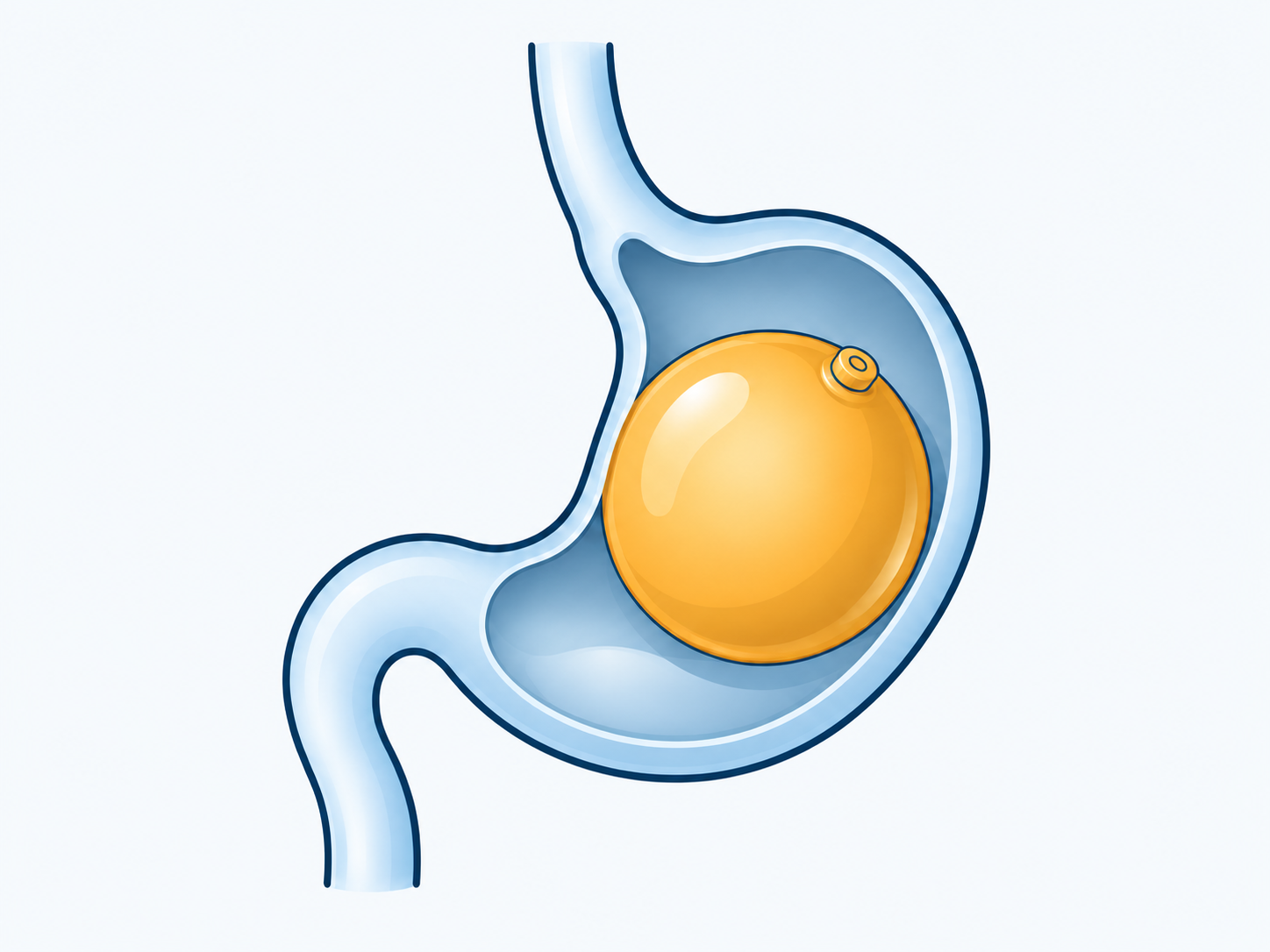
Cutaway stomach containing a single gold balloon, with the stomach wall and outlet intact.
Temporary device

Intragastric balloon

Orbera

A saline-filled balloon takes up space in the stomach.

Explore this treatment: Intragastric balloon

Temporary device

Intragastric balloon

Orbera

Cutaway stomach containing a single gold balloon, with the stomach wall and outlet intact.
A temporary fluid-filled balloon occupies space inside the stomach. Simplified illustration · not to scale.

How it works

A clinician places a soft balloon in the stomach using an endoscope through the mouth. The balloon occupies space and can help you feel full sooner.

Care & follow-up

Orbera is removed after about six months. A plan for nutrition, behavior support, follow-up, and possible next treatments is essential.

What to know

There are no external incisions, but this is still a medical procedure with risks. Nausea and vomiting can occur, and serious complications are possible. Weight regain after removal needs a plan.

FDA: Weight-management devices (opens in a new tab)

For education, not a personal treatment recommendation. Your clinician can explain benefits, risks, and alternatives for you.

Link to this treatment
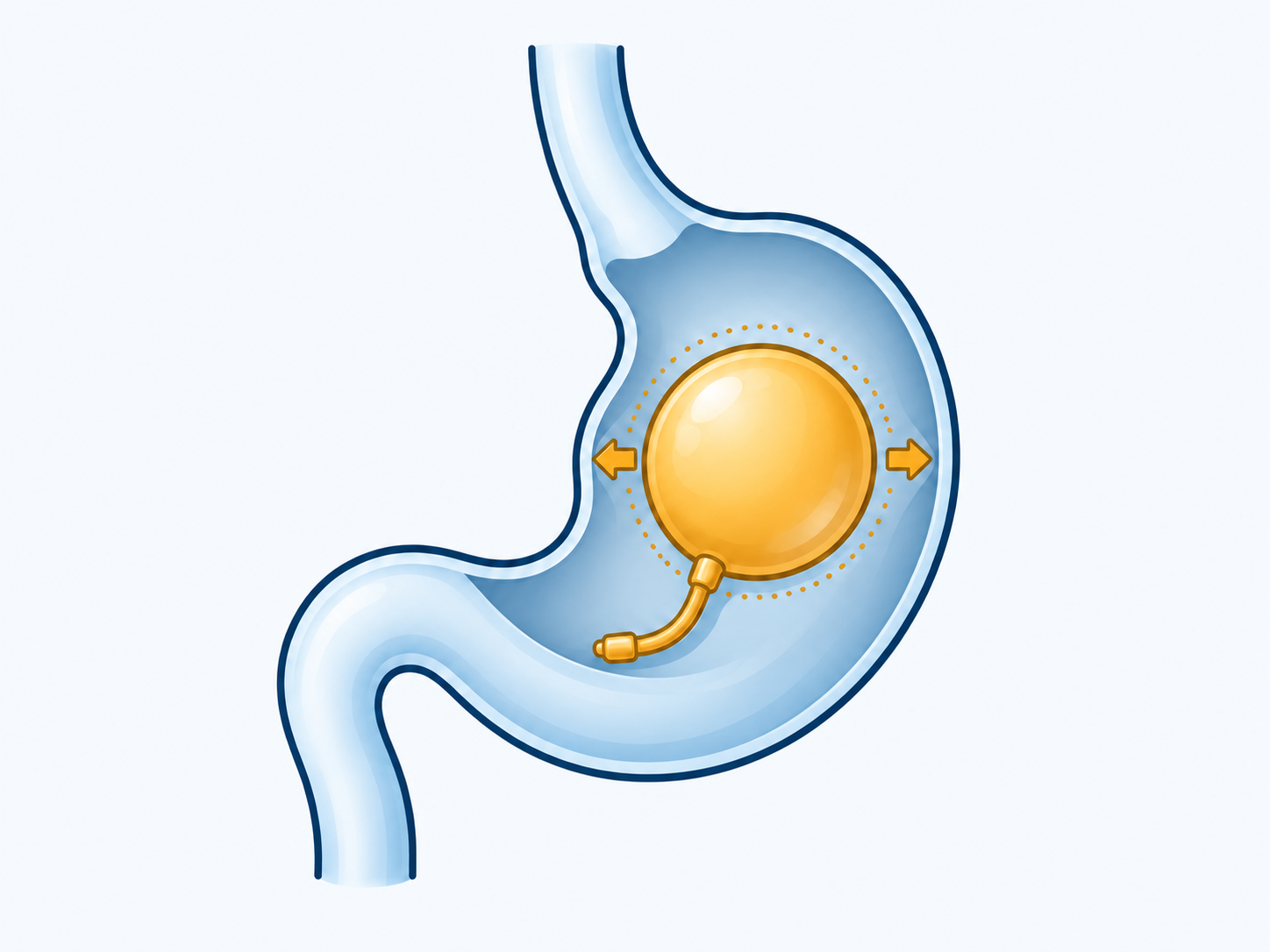
A balloon within the stomach with a short internal adjustment tail and arrows indicating a change in volume.
Temporary, adjustable device

Adjustable balloon

Spatz3

A stomach balloon whose volume can be changed during treatment.

Explore this treatment: Adjustable balloon

Temporary, adjustable device

Adjustable balloon

Spatz3

A balloon within the stomach with a short internal adjustment tail and arrows indicating a change in volume.
A balloon sits inside the stomach; its volume can be adjusted by the clinical team. Conceptual device illustration. Simplified illustration · not to scale.

How it works

Spatz3 is placed through the mouth with an endoscope. Its fill volume can be adjusted during treatment by an experienced team.

Care & follow-up

The U.S. FDA-approved maximum placement period is eight months. Adjustments and removal require further procedures.

What to know

Adjustment does not remove the risks of balloon treatment. Ask about intolerance, warning symptoms, removal arrangements, and the plan for maintaining progress.

FDA: Spatz3 instructions for use (opens in a new tab)

For education, not a personal treatment recommendation. Your clinician can explain benefits, risks, and alternatives for you.

Link to this treatment
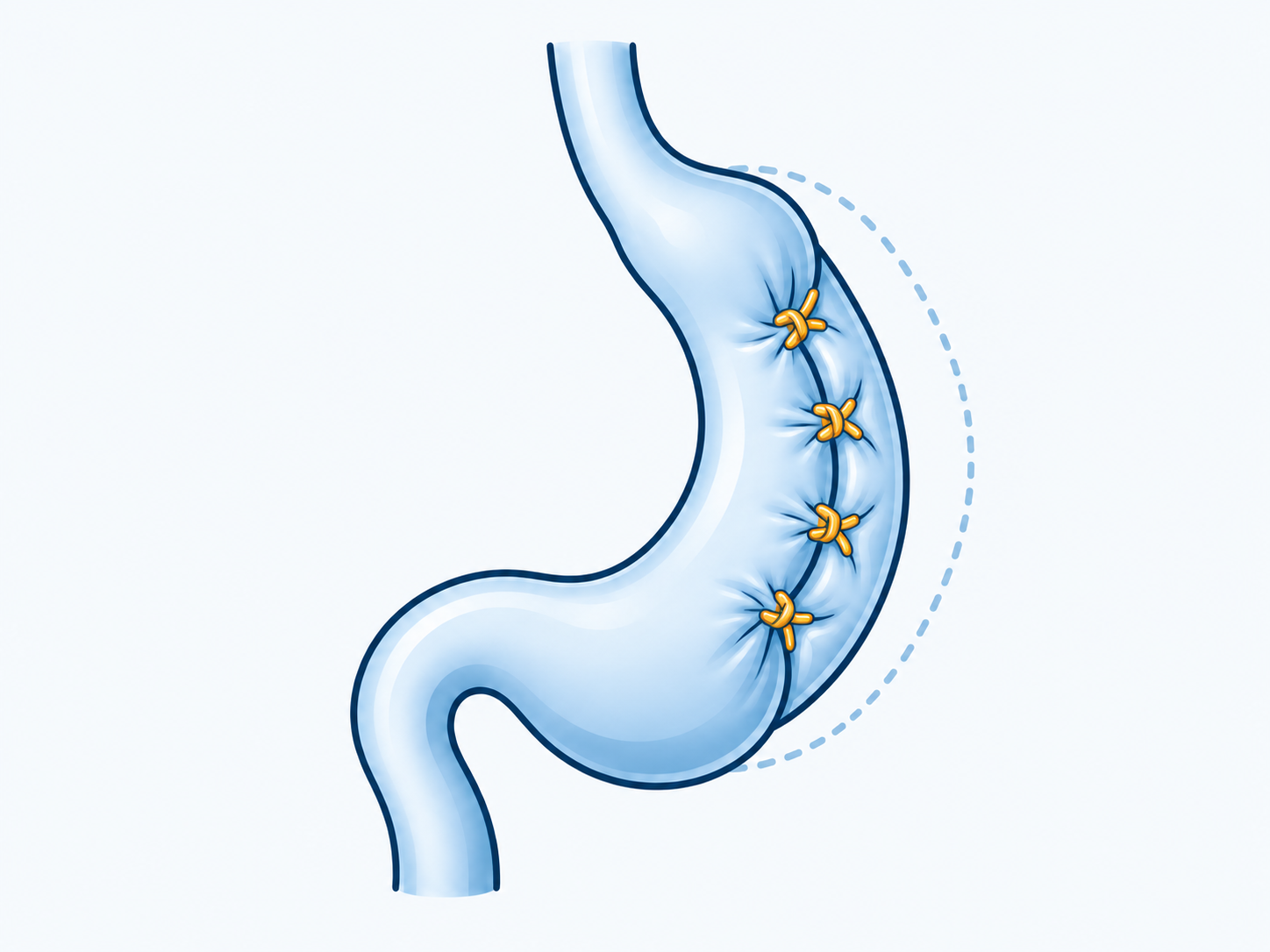
An intact stomach drawn narrower by a series of gold sutures and inward folds.
Endoscopic suturing

Endoscopic sleeve gastroplasty

ESG

Internal stitches reshape the stomach without removing part of it.

Explore this treatment: Endoscopic sleeve gastroplasty

Endoscopic suturing

Endoscopic sleeve gastroplasty

ESG

An intact stomach drawn narrower by a series of gold sutures and inward folds.
Internal sutures reshape the stomach. Stomach tissue is not removed. Simplified illustration · not to scale.

How it works

A specialist uses an endoscopic suturing system through the mouth to make the stomach smaller. ESG is different from surgical sleeve gastrectomy: it does not remove stomach tissue.

Care & follow-up

Expect a recovery and nutrition plan, regular follow-up, and ongoing support. Ask your team about their experience and longer-term results.

What to know

No external incisions does not mean no risk. Discuss complications, durability, potential further treatment, and how ESG compares with other options for your history.

ASMBS: Endorsed procedures and devices (opens in a new tab)

For education, not a personal treatment recommendation. Your clinician can explain benefits, risks, and alternatives for you.

Link to this treatment

Balloons are temporary. ESG reshapes the stomach with sutures. Both need an experienced team and a long-term care plan.

03 / Adjustable gastric band

Adjustable. Removable. Ongoing.

The gastric band is a surgical device with a long history. It deserves its own explanation, including the follow-up and long-term trade-offs.

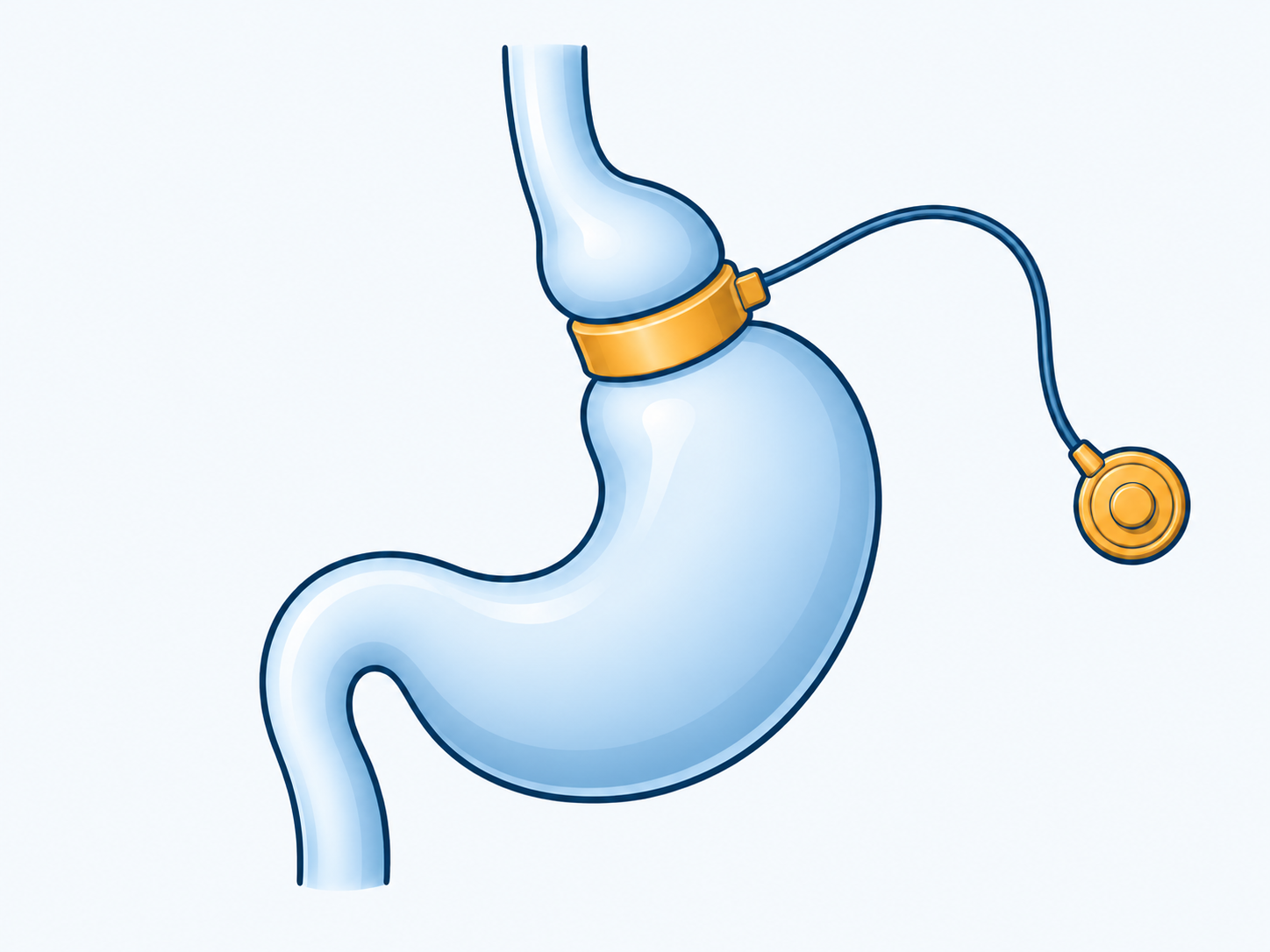
A gold band around the upper stomach connects by a thin tube to an adjustment port.
Laparoscopic surgery

Adjustable gastric band

Lap-Band

A removable ring around the upper stomach, adjusted over time.

Explore this treatment: Adjustable gastric band

Laparoscopic surgery

Adjustable gastric band

Lap-Band

A gold band around the upper stomach connects by a thin tube to an adjustment port.
A band sits around the upper stomach. A small port under the skin allows adjustments. Simplified illustration · not to scale.

How it works

A surgeon places an adjustable silicone band around the upper stomach through small incisions. The band forms a smaller pouch without removing stomach tissue or rerouting the intestine.

Care & follow-up

Adjustments happen through a port under the skin. Regular follow-up is part of treatment, and removal requires another procedure.

What to know

The band is used less often today than sleeve or bypass. Slippage, erosion, reflux, or inadequate response may lead to removal or revision. Removable does not mean risk-free or that every effect can be reversed.

ASMBS: Bariatric surgery procedures (opens in a new tab)

For education, not a personal treatment recommendation. Your clinician can explain benefits, risks, and alternatives for you.

Link to this treatment

A band is a form of bariatric surgery. We give it its own section because its adjustments and ongoing care work differently.

04 / Bariatric surgery

More than a smaller stomach.

Metabolic and bariatric procedures change anatomy and the signals the gut sends. The right conversation includes health, recovery, risks, and the care you will need for years to come.

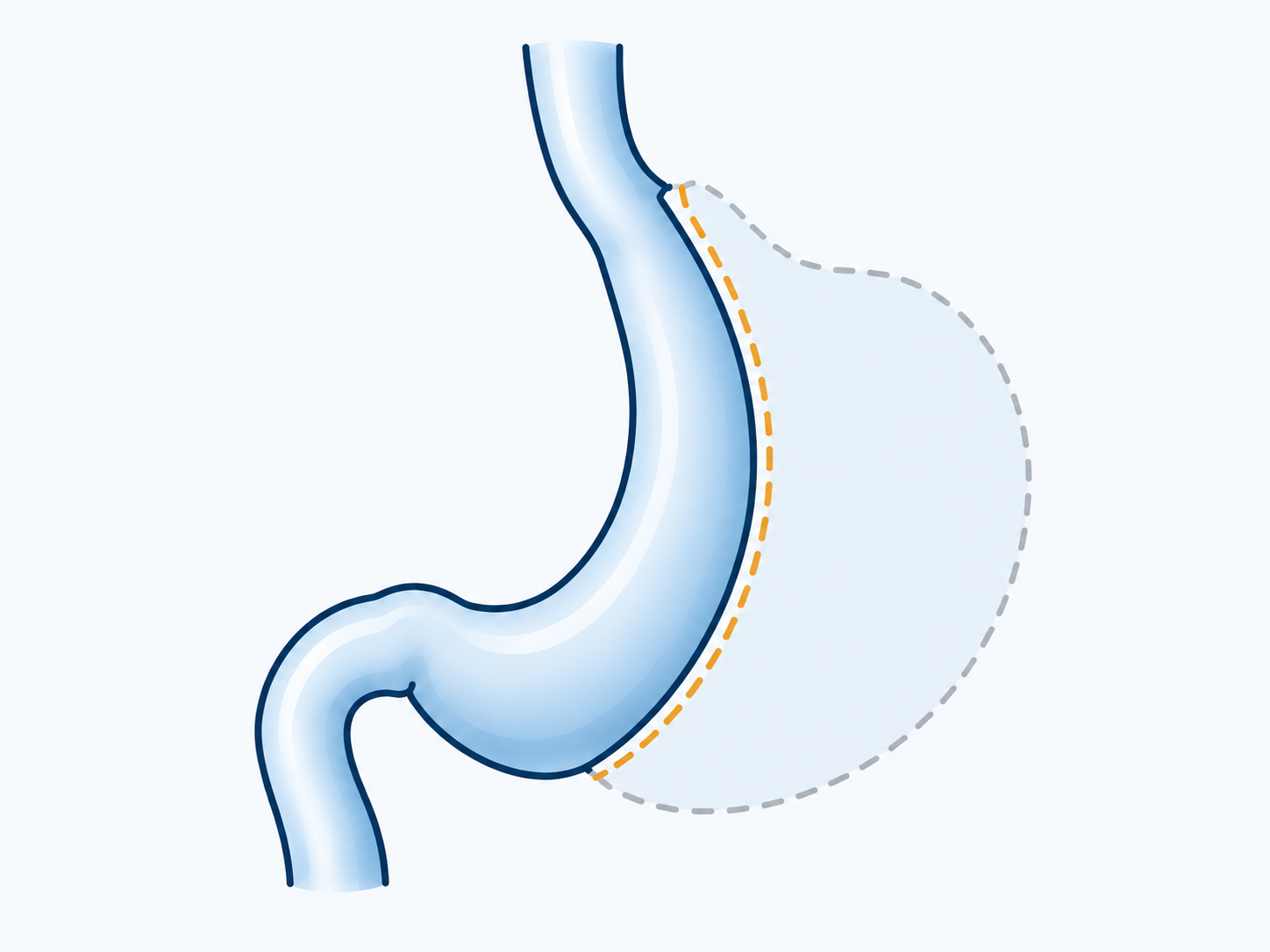
A narrow mint stomach sleeve beside a pale dashed outline of the removed outer stomach.
Metabolic & bariatric surgery

Sleeve gastrectomy

Gastric sleeve

Removes much of the stomach, leaving a narrow sleeve.

Explore this treatment: Sleeve gastrectomy

Metabolic & bariatric surgery

Sleeve gastrectomy

Gastric sleeve

A narrow mint stomach sleeve beside a pale dashed outline of the removed outer stomach.
Much of the stomach is removed, leaving a narrow sleeve. The dashed area represents the removed portion. Simplified illustration · not to scale.

How it works

The operation removes about 80% of the stomach and changes gut signals involved in hunger and fullness. It is different from endoscopic sleeve gastroplasty.

Care & follow-up

Lifelong nutritional follow-up, recommended supplements, and laboratory checks are part of care. Your team will guide recovery and food progression.

What to know

The operation is permanent. Acid reflux can develop or worsen, so tell your surgeon about reflux symptoms and discuss alternatives.

ASMBS: Bariatric surgery procedures (opens in a new tab)

For education, not a personal treatment recommendation. Your clinician can explain benefits, risks, and alternatives for you.

Link to this treatment
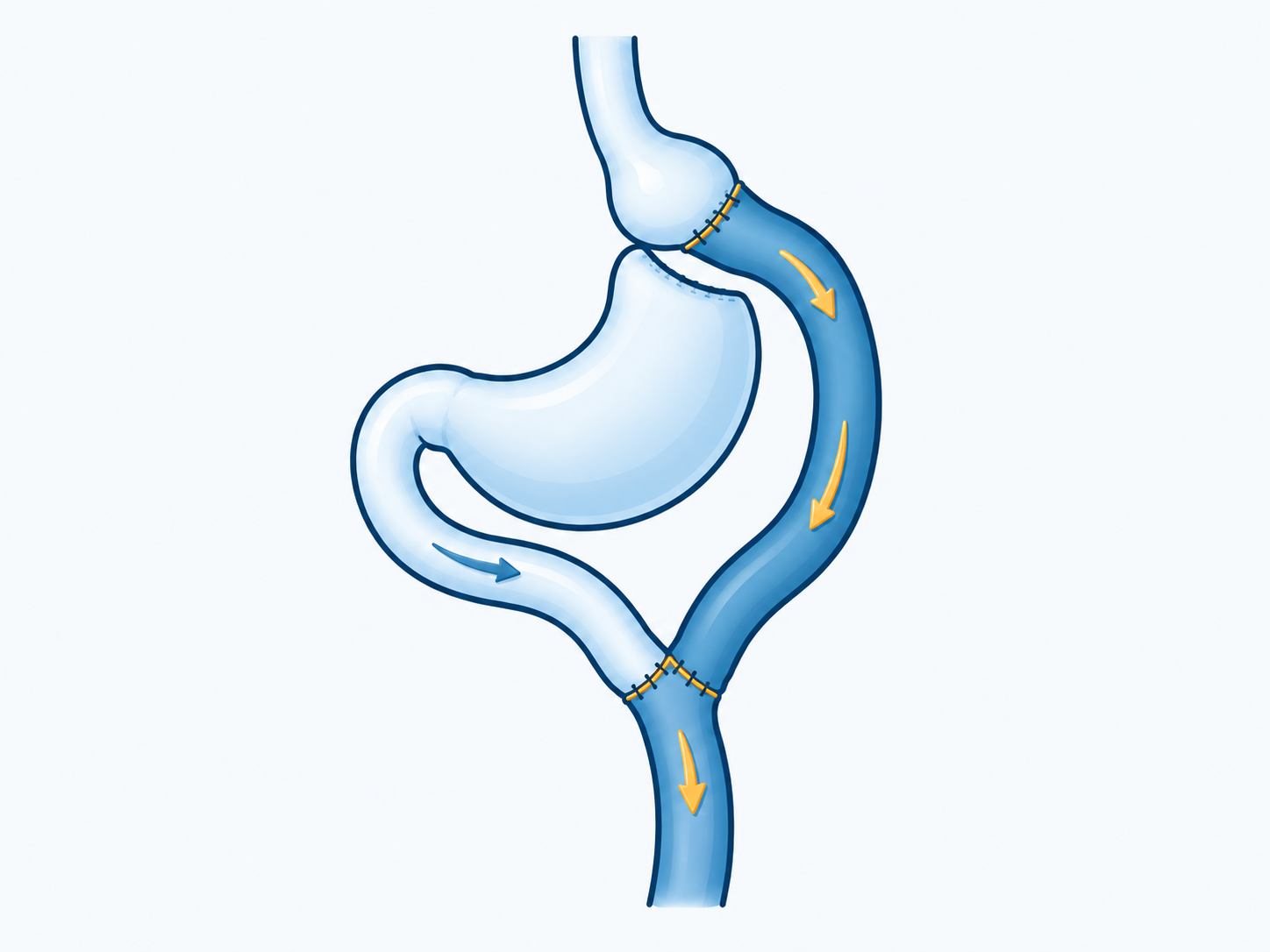
A small stomach pouch connects to a teal food limb; the excluded stomach drains into a separate pale limb joining lower down in a Y.
Metabolic & bariatric surgery

Roux-en-Y gastric bypass

Gastric bypass

Creates a smaller stomach pouch and reroutes part of the intestine.

Explore this treatment: Roux-en-Y gastric bypass

Metabolic & bariatric surgery

Roux-en-Y gastric bypass

Gastric bypass

A small stomach pouch connects to a teal food limb; the excluded stomach drains into a separate pale limb joining lower down in a Y.
A small pouch connects to a new food route. Digestive fluids join this route farther down. Simplified illustration · not to scale.

How it works

Gastric bypass changes the route food takes and affects gut hormones. A surgeon can explain how it may fit with conditions such as reflux or type 2 diabetes.

Care & follow-up

Ongoing supplements, lab checks, and nutrition care are essential. Your team should explain medication considerations and long-term monitoring.

What to know

Discuss surgical risks, vitamin deficiencies, ulcers, and dumping symptoms with your team. The best fit depends on more than expected weight loss.

ASMBS: Bariatric surgery procedures (opens in a new tab)

For education, not a personal treatment recommendation. Your clinician can explain benefits, risks, and alternatives for you.

Link to this treatment
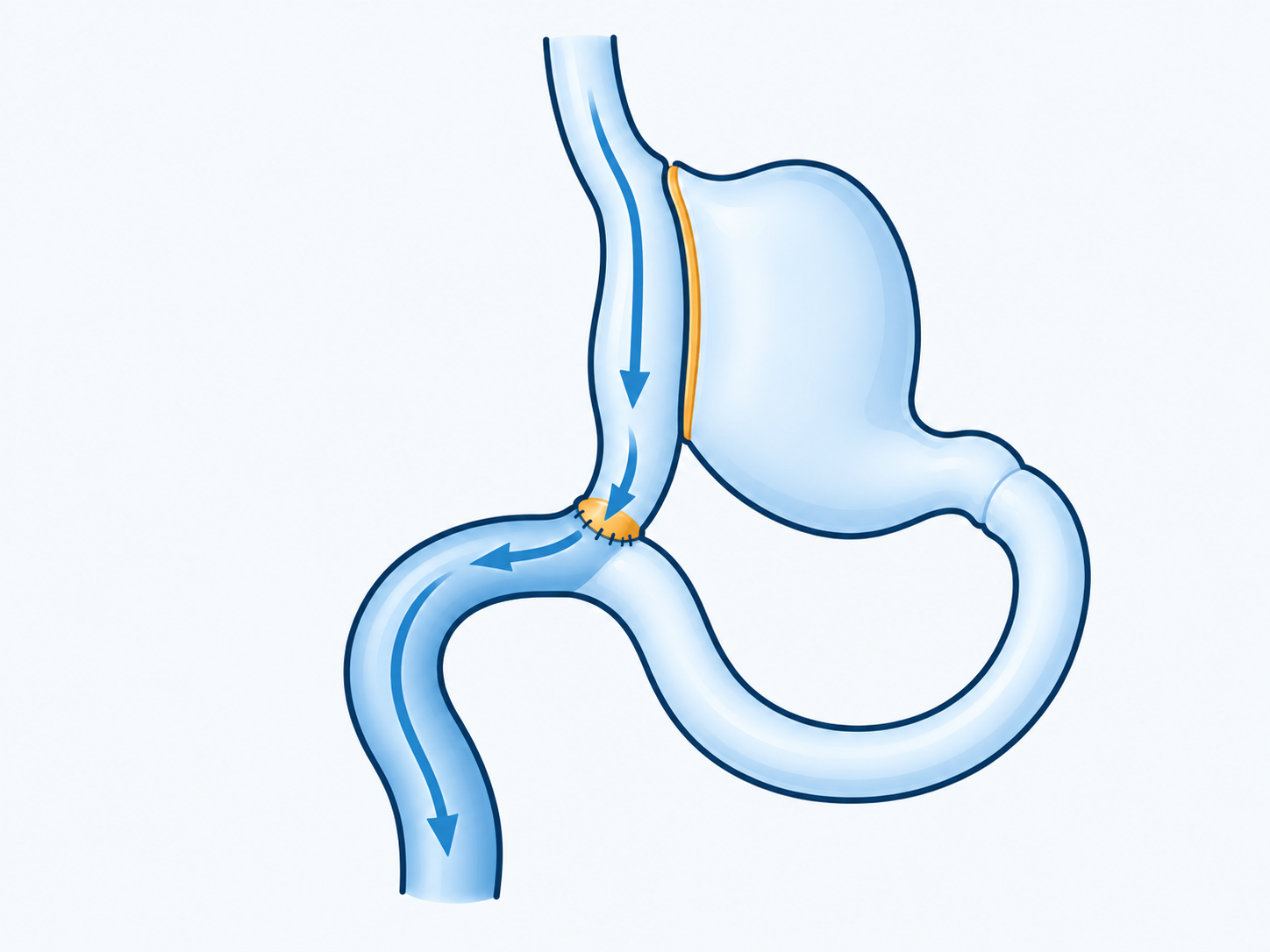
A narrow stomach pouch connects to the side of an intestinal loop, with the excluded stomach shown alongside.
Metabolic & bariatric surgery

One anastomosis gastric bypass

OAGB

A gastric bypass with one intestinal connection.

Explore this treatment: One anastomosis gastric bypass

Metabolic & bariatric surgery

One anastomosis gastric bypass

OAGB

A narrow stomach pouch connects to the side of an intestinal loop, with the excluded stomach shown alongside.
A long narrow pouch joins a loop of small intestine at one new connection. Simplified illustration · not to scale.

How it works

Sometimes called “mini bypass,” OAGB creates a stomach pouch and a single connection to the intestine. It appears on the ASMBS-endorsed procedure list.

Care & follow-up

Lifelong nutrition monitoring and supplementation are important. Ask about local availability and your surgeon’s experience with this procedure.

What to know

“Mini” does not mean minor. Discuss reflux, nutritional deficiencies, and the possibility of further surgery, as well as alternative procedures.

ASMBS: Endorsed procedures and devices (opens in a new tab)

For education, not a personal treatment recommendation. Your clinician can explain benefits, risks, and alternatives for you.

Link to this treatment
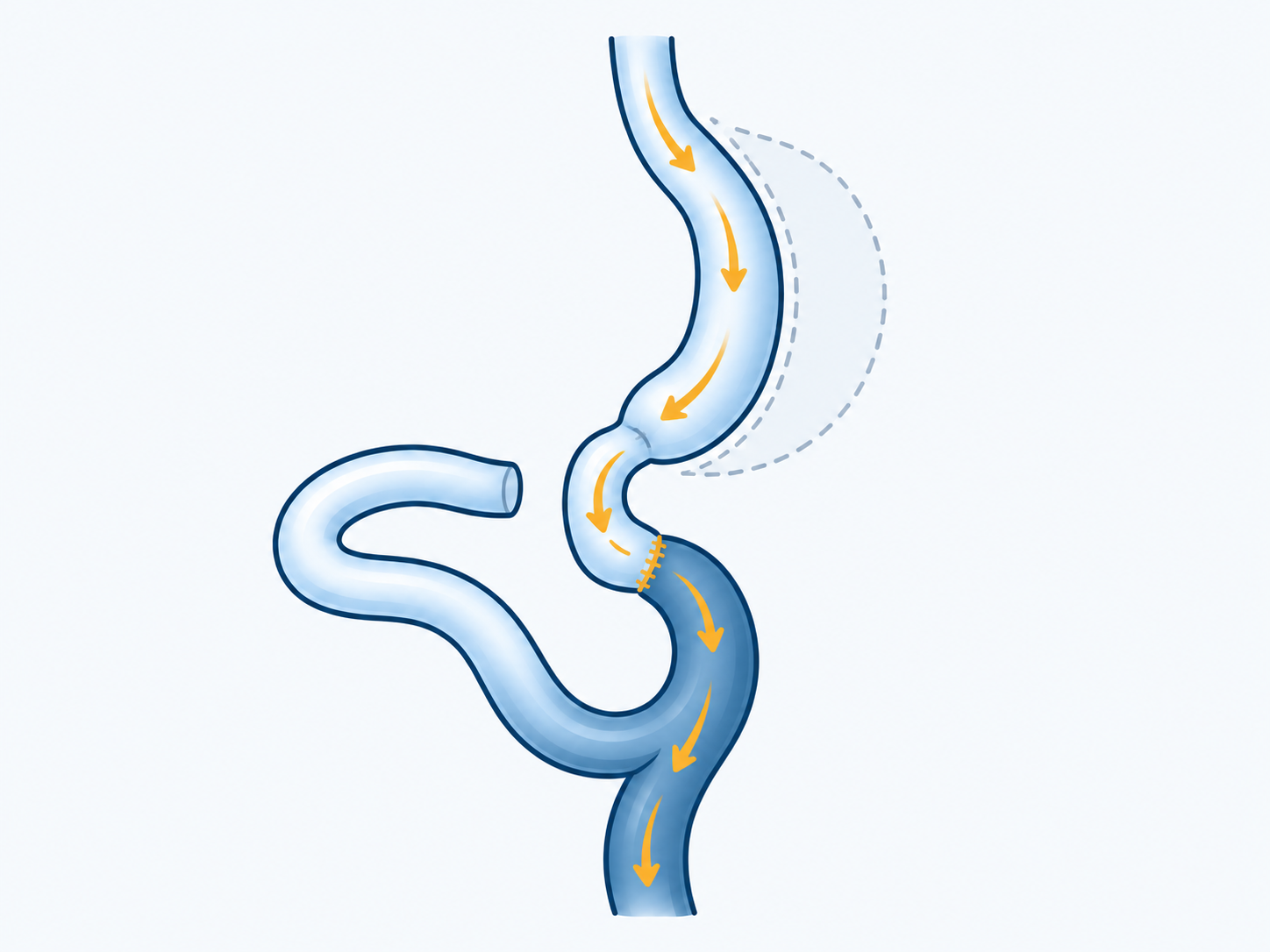
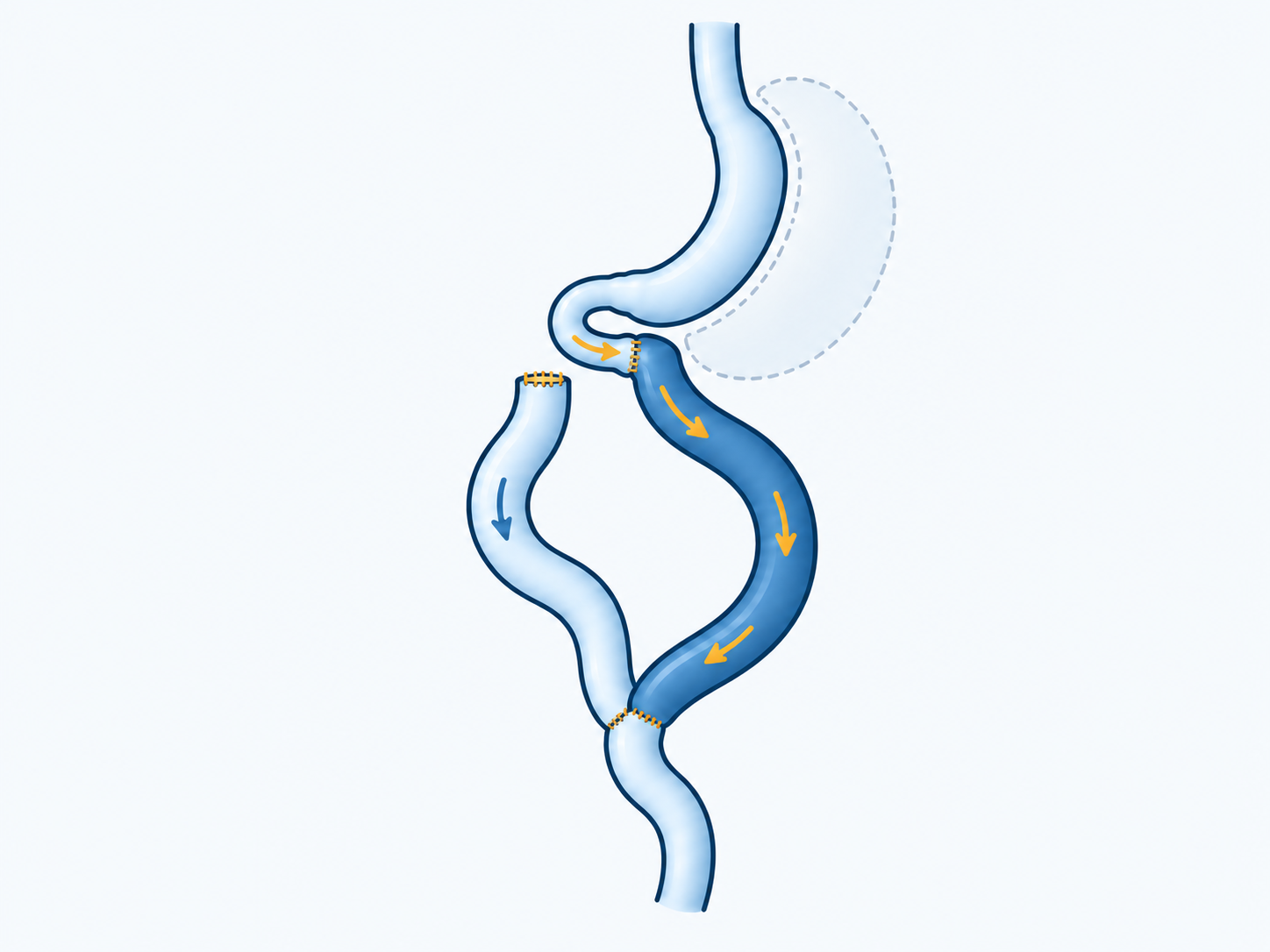
A sleeve and preserved stomach outlet connect to a distal intestinal loop; the bypassed segment is shown separately.
Metabolic & bariatric surgery

SADI-S

Single anastomosis duodeno-ileostomy with sleeve

Combines a sleeve with an intestinal bypass using one connection.

Explore this treatment: SADI-S

Metabolic & bariatric surgery

SADI-S

Single anastomosis duodeno-ileostomy with sleeve

A sleeve and preserved stomach outlet connect to a distal intestinal loop; the bypassed segment is shown separately.
A sleeve retains the stomach outlet; a short duodenal segment joins a loop of intestine at one new connection. Simplified illustration · not to scale.

How it works

SADI-S combines sleeve gastrectomy with a bypass that changes the path of food through the small intestine. It is related to the duodenal switch.

Care & follow-up

A lifelong plan for protein intake, vitamins, and laboratory monitoring is essential. Choose a team with experience in this procedure and its long-term care.

What to know

Changes in absorption mean nutritional risks need close attention. Discuss digestive changes, complications, and what support is available years after surgery.

ASMBS: Bariatric surgery procedures (opens in a new tab)

For education, not a personal treatment recommendation. Your clinician can explain benefits, risks, and alternatives for you.

Link to this treatment
A sleeve connects through a short duodenal segment to a teal food limb; a pale digestive-fluid limb joins at a lower Y connection.
Metabolic & bariatric surgery

Duodenal switch

Biliopancreatic diversion with duodenal switch (BPD/DS)

Combines a sleeve with a more extensive intestinal bypass.

Explore this treatment: Duodenal switch

Metabolic & bariatric surgery

Duodenal switch

Biliopancreatic diversion with duodenal switch (BPD/DS)

A sleeve connects through a short duodenal segment to a teal food limb; a pale digestive-fluid limb joins at a lower Y connection.
A sleeve and preserved stomach outlet feed a separate intestinal route, with digestive fluids joining near the end. Simplified illustration · not to scale.

How it works

The duodenal switch changes the stomach and the route through the intestine. It can have substantial effects on weight and metabolic health.

Care & follow-up

Lifelong supplementation, protein planning, lab checks, and specialist follow-up are central to treatment.

What to know

This approach carries significant nutritional risks, including vitamin and protein deficiencies. Discuss the balance of potential benefits and complications for your situation.

ASMBS: Bariatric surgery procedures (opens in a new tab)

For education, not a personal treatment recommendation. Your clinician can explain benefits, risks, and alternatives for you.

Link to this treatment
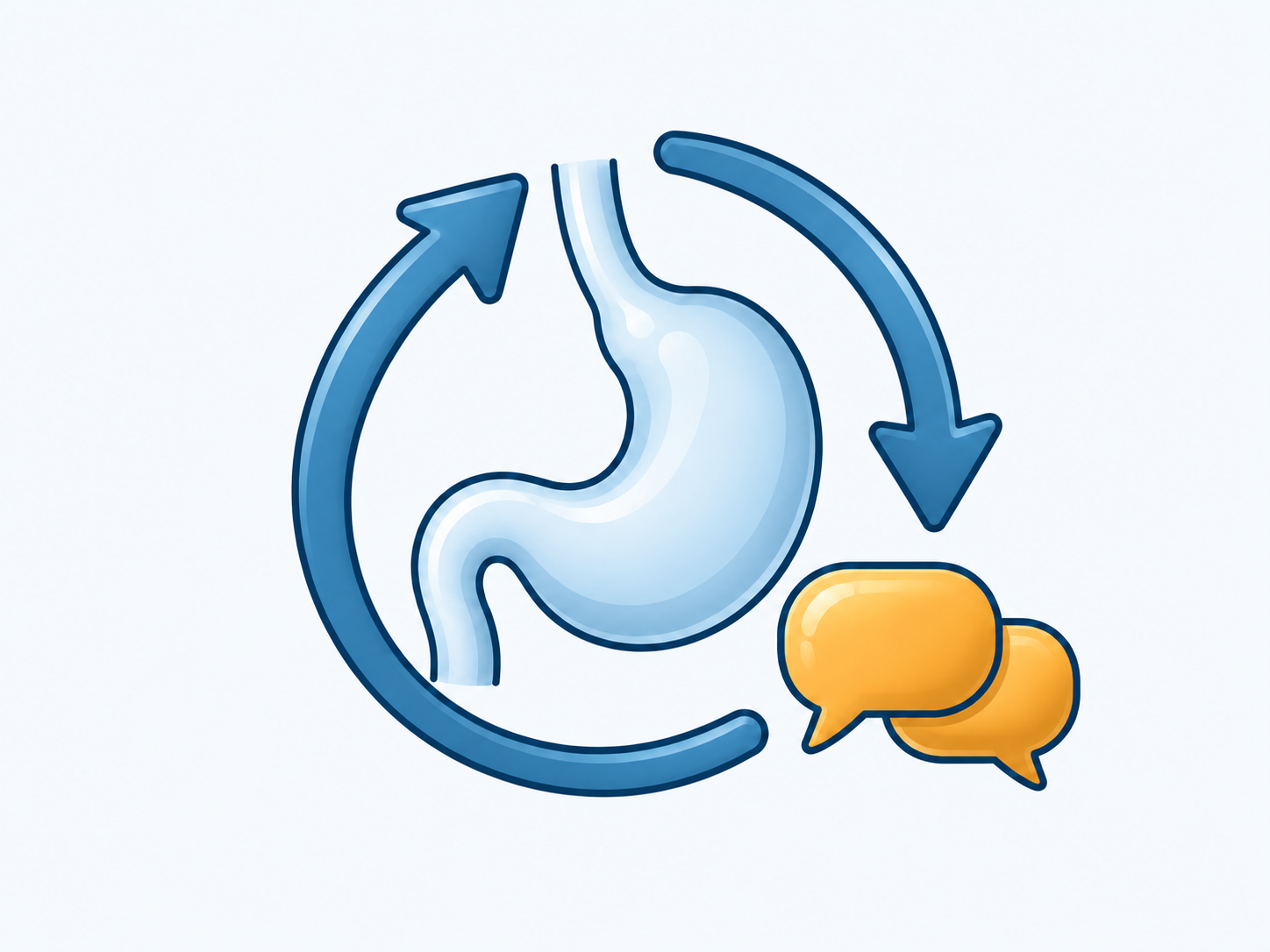
A simplified stomach surrounded by reassessment arrows and two conversation bubbles.
A change in the care plan

Revision surgery

Re-operative bariatric surgery

Revisits a previous procedure to address a new or ongoing need.

Explore this treatment: Revision surgery

A change in the care plan

Revision surgery

Re-operative bariatric surgery

A simplified stomach surrounded by reassessment arrows and two conversation bubbles.
Revision is tailored to the previous procedure and current needs. This is a concept illustration, not a specific operation. Simplified illustration · not to scale.

How it works

Revision can change or correct a previous operation, such as converting a band or sleeve to another procedure. Reasons may include complications, reflux, or insufficient response.

Care & follow-up

An experienced team reviews your original operation, current anatomy, symptoms, nutrition, and treatment goals before recommending a next step.

What to know

Re-operative surgery can be more complex and have different risks. Medication and other support may also be part of the plan. Needing more care is not a failure.

ASMBS: Endorsed procedures and devices (opens in a new tab)

For education, not a personal treatment recommendation. Your clinician can explain benefits, risks, and alternatives for you.

Link to this treatment

Surgical techniques are not FDA-approved in the way medicines and devices are. The procedures here are on the ASMBS-endorsed list. Eligibility and insurance coverage are separate questions to discuss with your team.

Care that grows with you

Your next chapter can
use a different tool.

Medication before surgery. Medication after surgery. A revision years later. Your care can evolve as your needs change. That is treating a chronic disease like a chronic disease.

A change of plan is not a failure.
ExploreTreatReassess

Nutrition, movement, mental health, and community support belong throughout your care.

Bring your questions.

Your health is more than a number.

A conversation starter

Make the numbers
a little more personal.

The Weight Loss Treatment Estimator from Valley Bariatric shows educational projections for surgery and GLP-1 medication. Use it to start a discussion with your specialist.

Open the treatment estimator (opens in a new tab)

Provided by Valley Bariatric · Powered by Spark Bariatric

This tool compares surgery and GLP-1 medication, not every option on this page. Estimates are not promises or medical advice. Real-life results vary.

You deserve a team

The most important choice?
Who walks with you.

Look for a clinician trained in obesity medicine or a bariatric surgeon, with dietitians, behavioral health professionals, and support around them. Ask about credentials, experience, and long-term care.

01

The whole menu

A team that offers several options, or works closely with people who do, can help you consider the right fit.

02

A plan beyond day one

Medication monitoring, balloon removal, band adjustments, nutrition, labs, and long-term follow-up all matter.

03

The whole you

Sleep, diabetes, reflux, mental health, joint pain, and your actual life belong in the conversation.

04

Care without judgment

You should leave feeling heard. Regain and changing needs deserve support and a plan.

For medical care, ask about American Board of Obesity Medicine certification. For surgery, ask about the surgeon’s experience and whether the center is MBSAQIP-accredited.

Take these questions with you.

What are my options?

Which treatments fit my health history, and why? What alternatives should we discuss?

What happens over time?

What follow-up, nutrition support, labs, or supplements will I need? Who helps if problems come up?

How will we assess progress?

What will we track besides weight? When would we adjust or change the plan?

What will it cost?

What does my insurance cover? What are the ongoing costs, and what happens if coverage changes?

You don’t have to figure this out alone.

Our community is full of people who have been where you are. Pillars support groups, classes, and meetups are here for every step, whatever your treatment path.